From world-class support to world-class self-service
Building Shopify's first AI support tools for millions of merchants
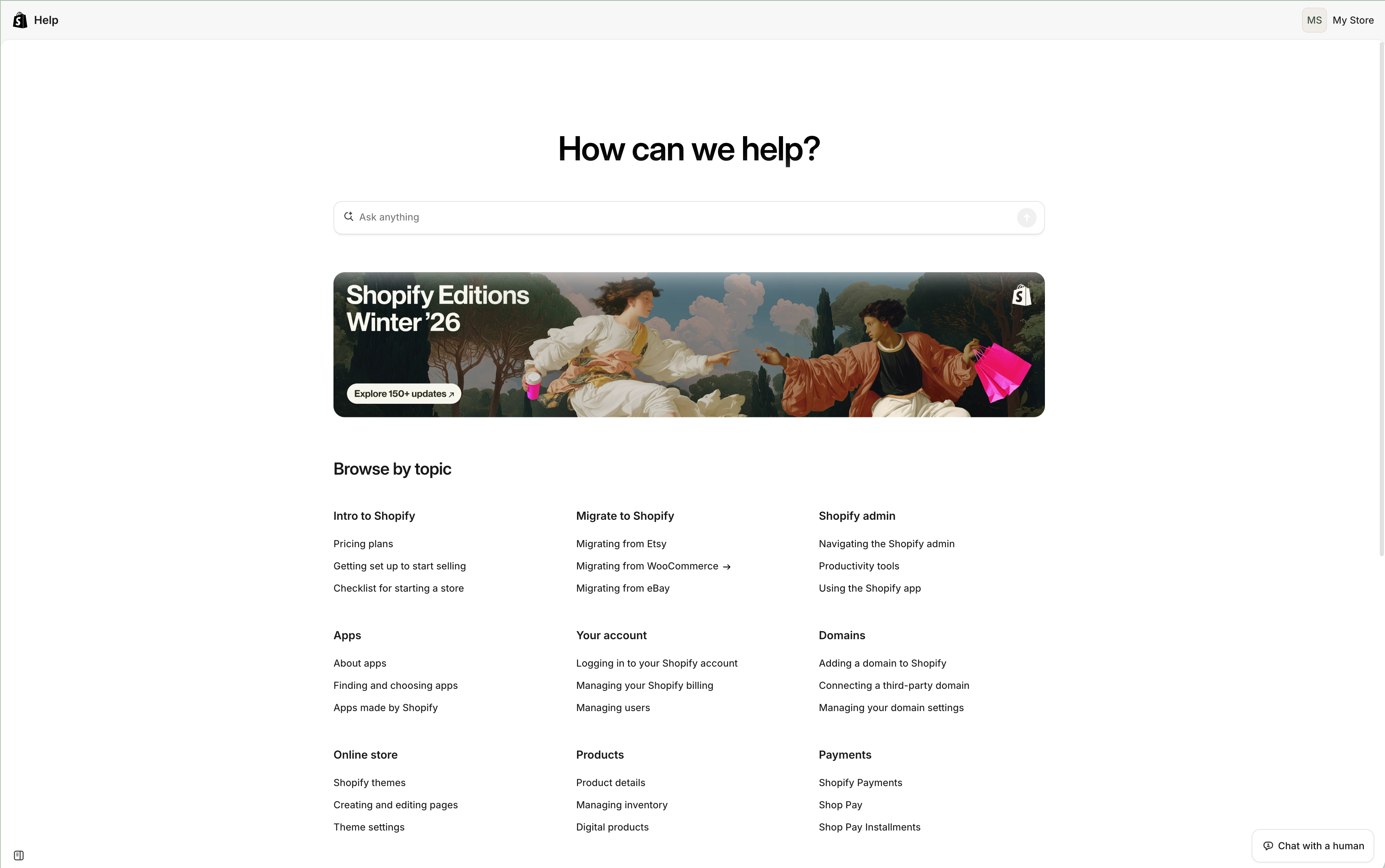
Shopify is known for world-class customer support. But their self-service Help Center hadn't kept up. Search was noisy, navigation was unclear, and merchants struggled to find answers on their own. With millions of storefronts and growing, that gap was becoming expensive: every question that couldn't be self-resolved meant another support agent on the clock.
The goal
Help Shopify's merchants solve problems on their own and get back to running their business, without waiting on a support agent.
The approach
I started with the data. Working with Shopify's analytics team, we mapped the most common merchant problems and sorted them into two buckets: issues that could realistically be solved by the merchant on their own, and problems complicated enough that they were almost certainly going to end in a call to support. That distinction shaped everything we designed. From there, I drove alignment across support, marketing, and security leadership to set expectations and guidelines before anything shipped.
About three months in, LLMs hit the scene. The technology was new, full of gaps, and moving fast. I put my team to work learning what it could actually do, where it fell short, and anticipating what it would be capable of soon. We had to figure out how to build with it responsibly before anyone at Shopify had a playbook for that.
There was also a trust problem to solve. People had years of experience with useless bots on other sites, and Shopify's merchants were used to getting a real person on the line. Convincing them that an AI tool could actually help meant understanding these entrepreneurs deeply: what they were trying to do, how urgent it felt, and what would earn their confidence versus what would make them close the chat and pick up the phone.
The results
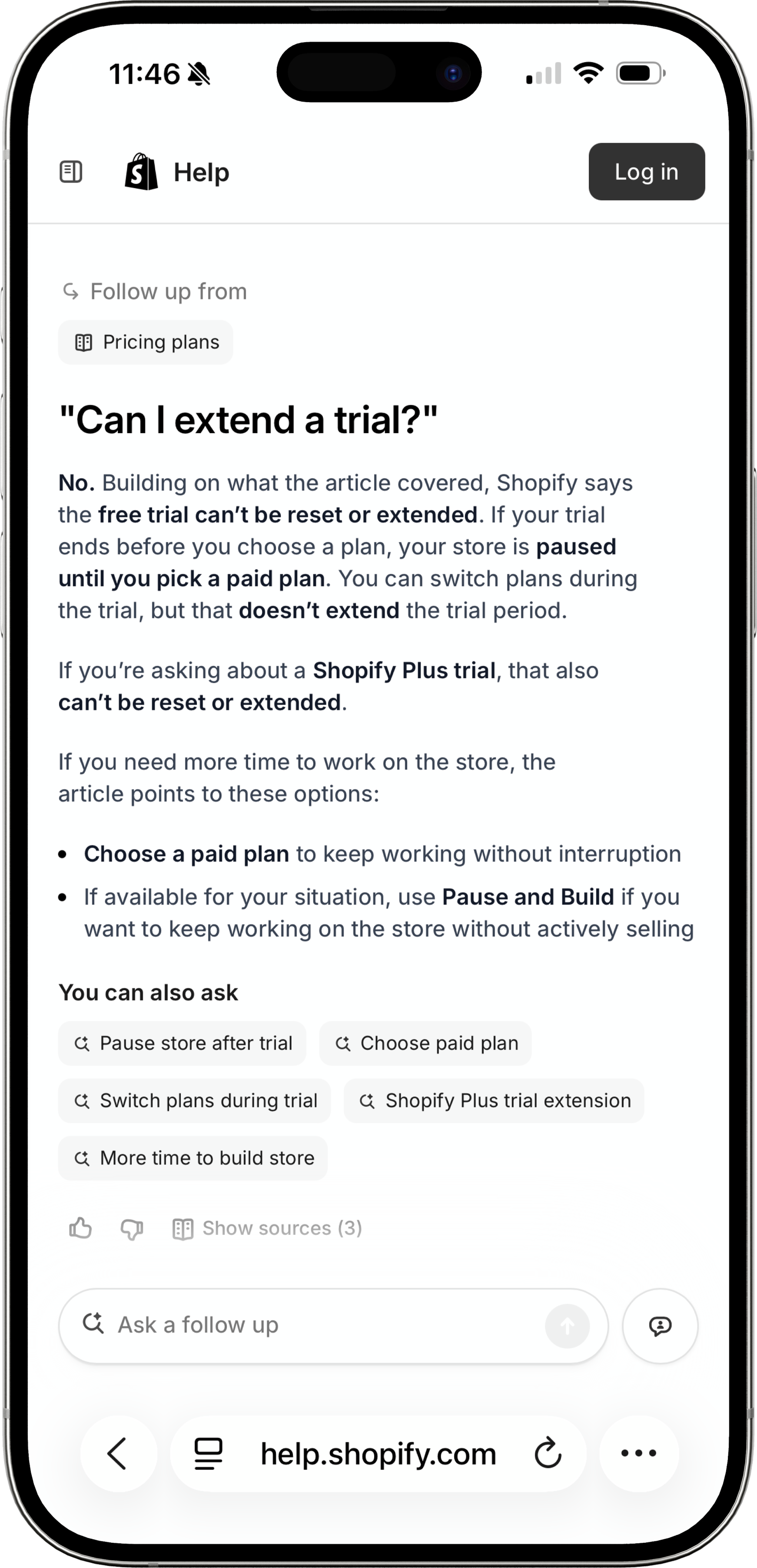
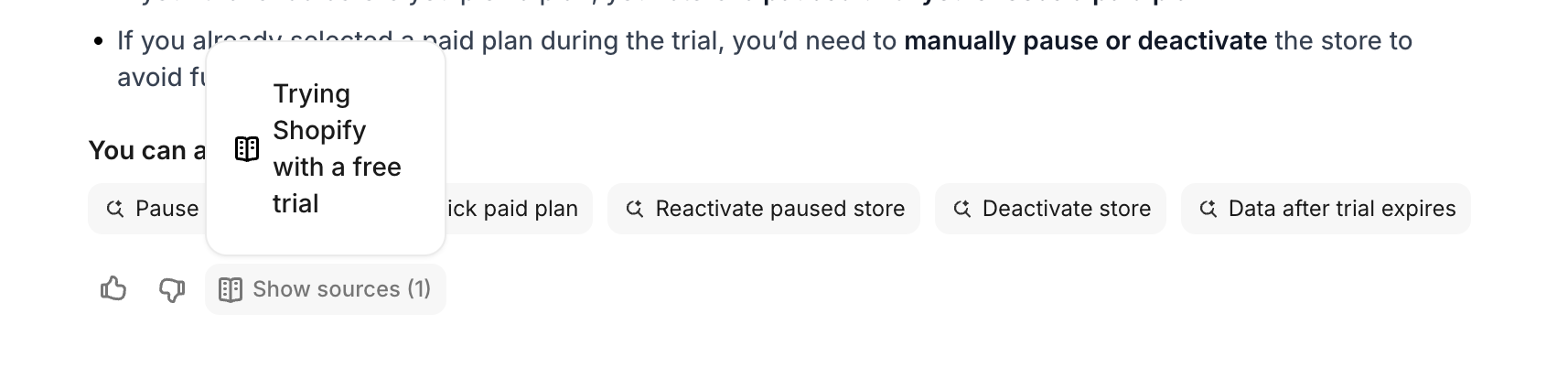
We shipped a smarter search experience that felt familiar on the surface but worked completely differently underneath. It pulled from support documentation, community forums, Reddit, video content, and past agent transcripts to surface real answers, not just links. Every answer included citations merchants could click through for deeper context, helping build trust in a tool they had every reason to be skeptical of.
Later, we connected the experience directly to Shopify's admin, guiding merchants step by step to the exact settings they needed to fix their problem. Not just telling them the answer, but walking them there.
The impact went beyond self-service. Self-resolution rates went up. Calls to the help center went down. And the data flowing through the system started making live support agents better too, giving them richer insight into what problems merchants were hitting and how they were solving them on their own.
The AI standards we set for this project became the foundation for how Shopify approached AI across support. We defined what the technology could be trusted with, where a human needed to stay in the loop, and how to communicate AI-generated answers in a way that earned merchant confidence. Those standards outlived the project.
Thinking about AI in your product? Let's talk.