Giving agents the right answer at the right time
AI-powered research and response tools for Shopify's support agents
Merchant growth was outpacing support, and every agent needed to handle more conversations, faster, without dropping the complex ones. Inside live conversations, agents were losing that race to the search for answers. We directed the research effort to understand why, convening subject experts including help center supervisors, frontline agents, and VP-level support leadership. We traveled to BPOs and internal call centers to observe how agents actually work, then used those findings to design AI-powered tools that meet agents inside the conversation.
The research
We started by going to the source. We sat with agents as they worked live tickets, watched supervisors triage queues, and interviewed support leadership about where the gaps were. The pattern was clear: agents knew the answers existed somewhere, but finding them in real time was the bottleneck. They were toggling between knowledge bases, internal docs, and Slack channels while customers waited.
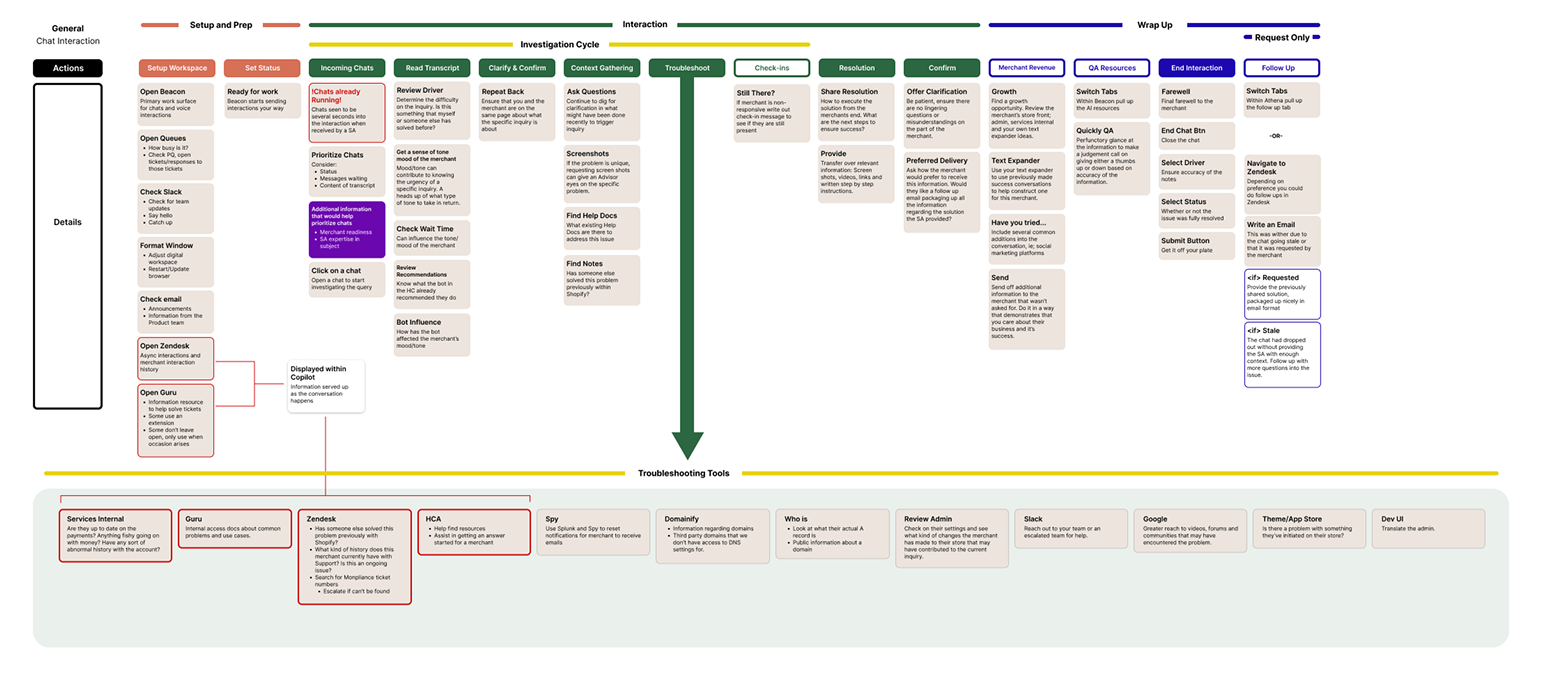
Mapping the workflow made the problem undeniable. A single merchant conversation runs through dozens of steps, setup, triage, investigation, troubleshooting across a dozen tools, resolution, confirmation, and wrap-up, and agents run several of these conversations at once. Every toggle between tools is a place where time, context, and patience leak out.
The solution
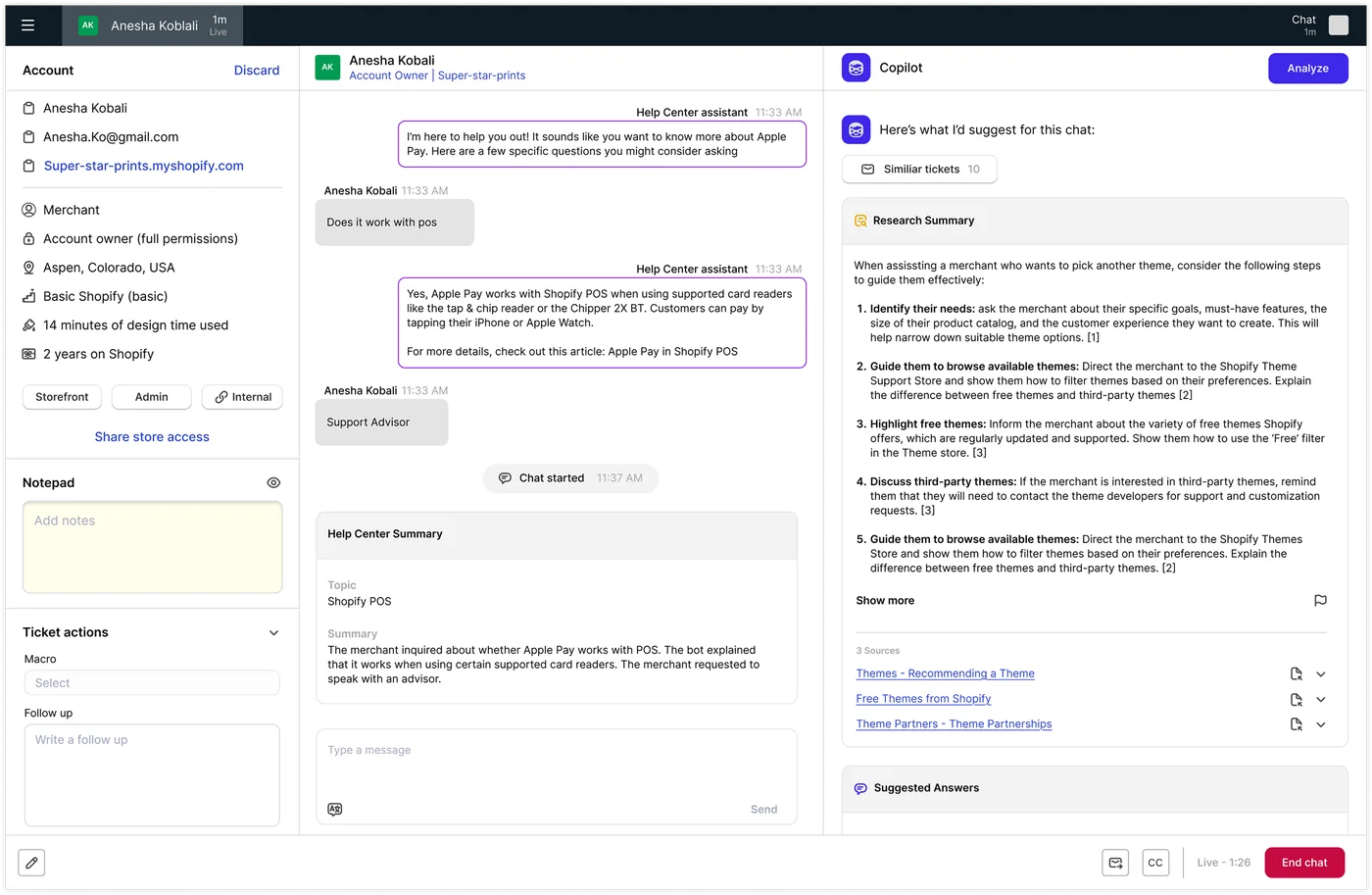
We designed an AI layer that listens to the live conversation and proactively surfaces relevant research summaries, suggested responses, and source material. Agents get what they need without leaving the conversation window. The system cites its sources so agents can verify before sending, and a feedback loop lets them flag bad suggestions to improve the model over time.
Three pieces, one conversation
An agent opening a chat used to start cold: who is this merchant, what have they already tried, and what do they actually need? Assembling that from scratch, on every conversation, several conversations at a time, is where the first minutes of every chat went.
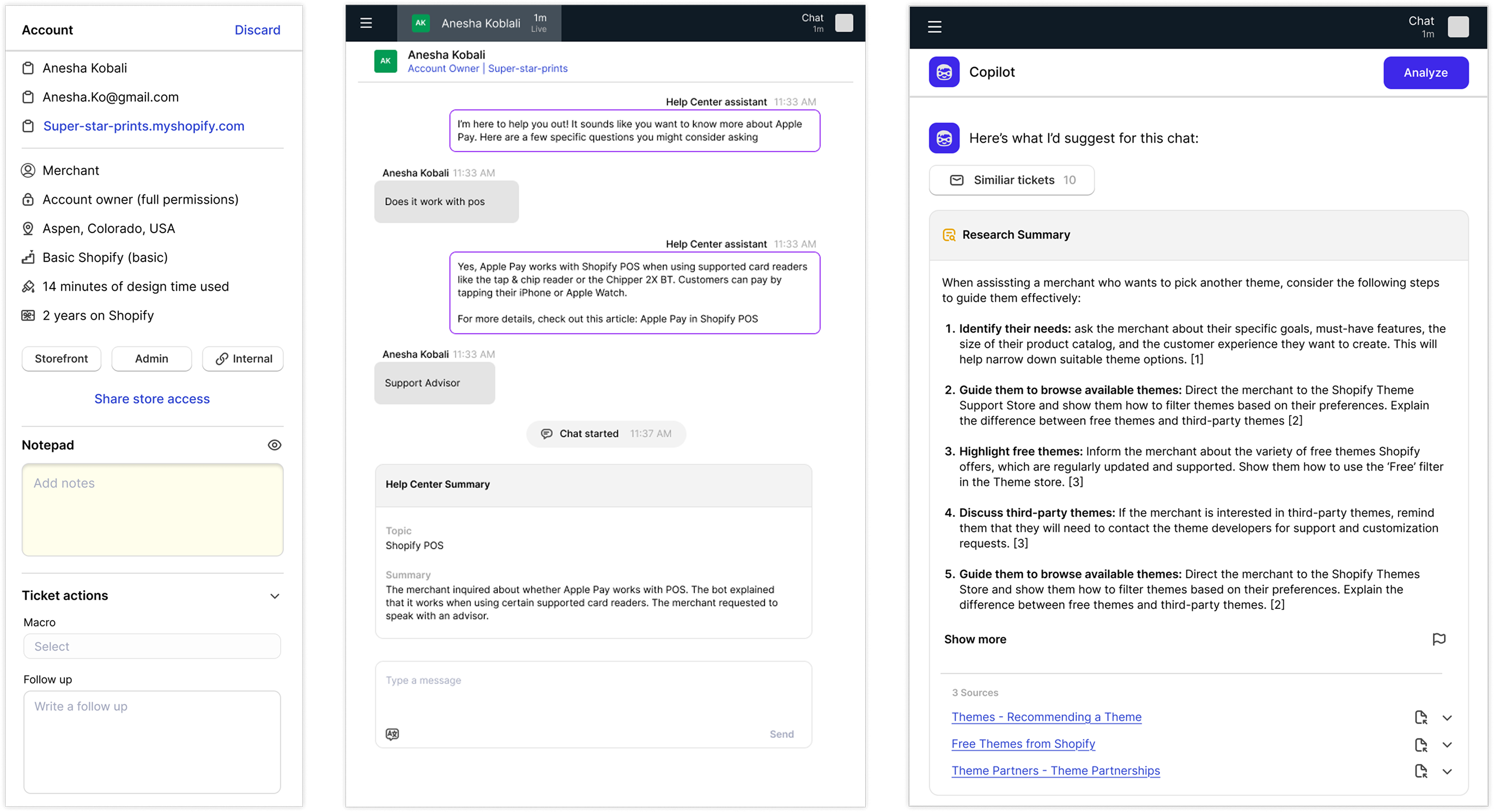
We rebuilt three pieces to answer those questions before the agent asks them. The account panel puts the merchant in view: who they are, their store, their plan, their permissions, how long they've been on Shopify. The help center summary carries in what happened before the chat: the topic, what the assistant already covered, and why the merchant asked for a person. And Copilot works ahead of the conversation with suggested answers, similar tickets, and research the agent can verify.
Each piece feeds the others. Together they surface the most helpful information at the moment it's needed, so the agent starts mid-stride instead of from zero, and the merchant feels the difference in how fast they get to a resolution.
A two-way knowledge system
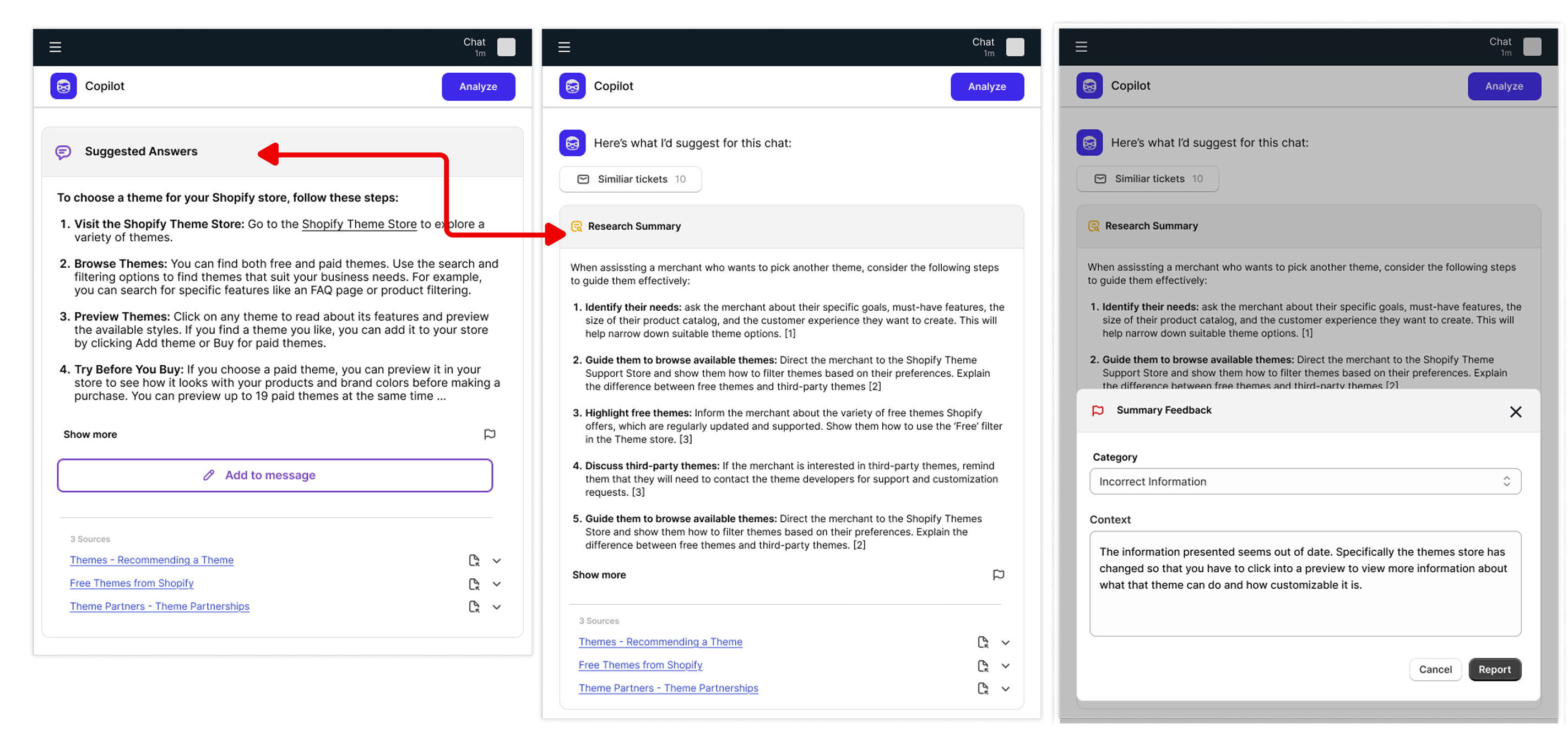
The assistant didn't just pull from existing help center content. It also learned from the agents themselves. When human agents resolved issues in ways the system hadn't seen before, those resolutions were captured and fed back into future help center articles. The help center got smarter because the agents were using the tool, and the tool got smarter because the help center was improving. Each side made the other better.
The impact
New agents ramped up 50% faster. First contact resolution went up, and average handle time came down.
Both trace back to the same two mechanics: how quickly agents could reach the right information mid-conversation, and how often the AI was already ahead of them, preemptively answering the question or offering a speculative answer with its references attached, so the agent could verify instead of search.
The onboarding gain was the surprise. The assistant acted as a real-time coach, guiding new agents through unfamiliar topics while they learned the product. Senior agents spent less time answering the same questions, and the quality of support stayed consistent regardless of who picked up the ticket.
Thinking about AI in your product? Let's talk.