Content management that fits how small businesses actually work
A custom content management system for an engineering firm to showcase completed projects and manage their web presence
A brand-new site, and no way to update it without a developer. Off-the-shelf platforms wanted a fee for too many features the client would never use. Our client, an engineering firm, is constantly completing new projects and needed their site to keep up. We built them a custom content management system that puts the company in full control of their web presence.
Secure login
Every user logs in with their own credentials through a proper authentication system, built specifically for how the client's team is structured. Permissions are role-based, so each person sees exactly what they need and nothing they don't. No shared logins, no workarounds. The system protects the company's content and data without getting in the way of the people using it every day.

Project pages
The firm completes engineering projects constantly, and every one of them deserves a page on the site. The CMS lets anyone on the team create a new project page, write a description, upload photography and video, and publish it live. No code, no staging environment, no waiting on a developer. A new project can go from finished to published in minutes.
Homepage control
The hero carousel, the service category images, the way the site greets visitors: the client controls all of it. When the company wraps a landmark project or adds a new capability, they update the homepage on their own terms, on their own timeline.
Staff management
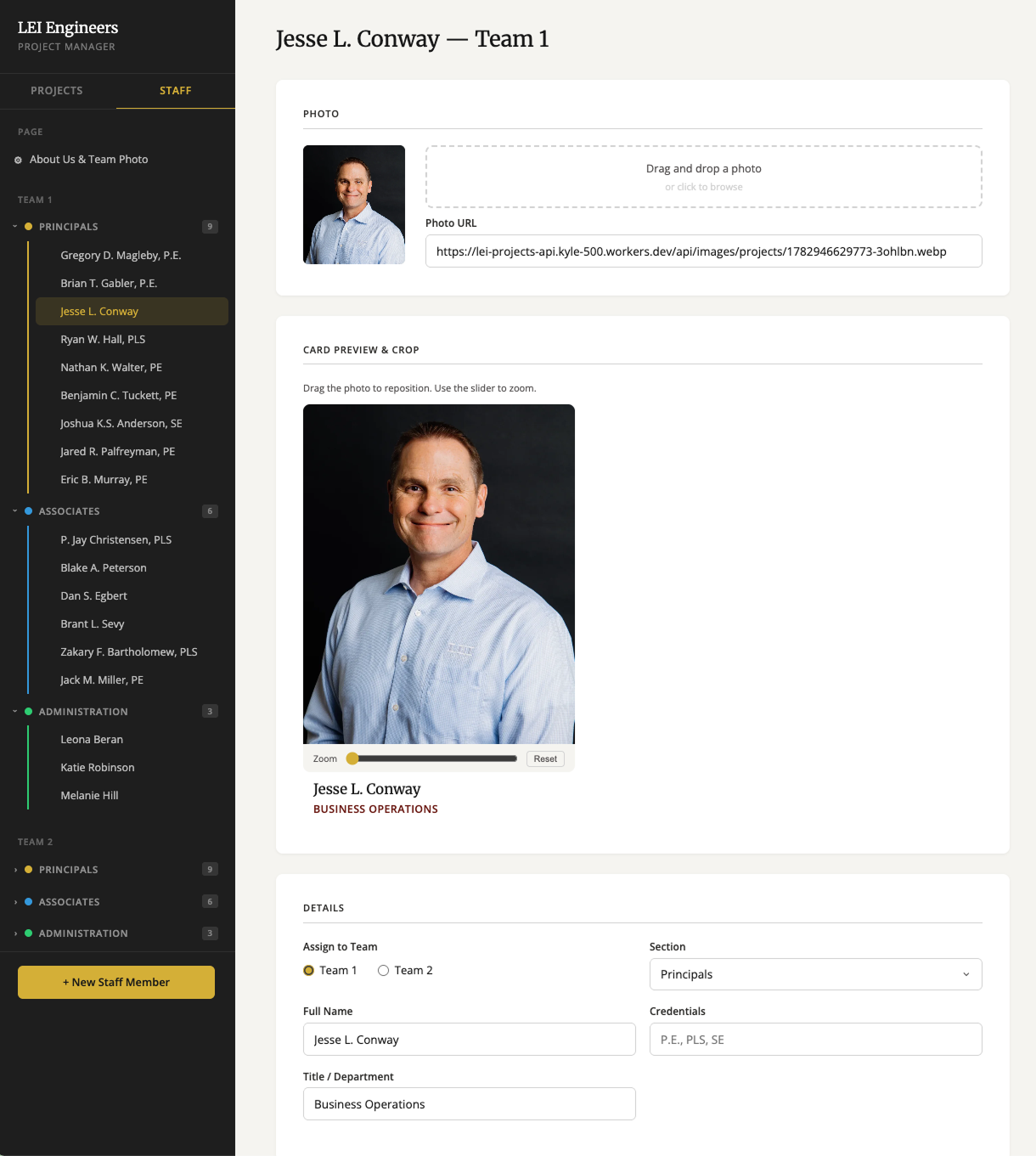
New hires, departures, title changes, updated headshots: it all runs through the CMS. The team page stays accurate because the people closest to the information are the ones updating it. No more calling a developer to swap out a photo or fix a job title.
Built-in performance optimization
Every image uploaded through the CMS is automatically converted to WebP and sized for the web. The team uploads whatever they have, and the system handles the rest. Pages stay fast, load times stay low, and nobody has to think about file formats or compression. It's the kind of thing most businesses don't notice until it's missing.
What we learned
A custom tool is only powerful if the people running it can learn it and execute with it quickly. The person updating this site might be a structural engineer, an office administrator, or someone's personal assistant, none of which are full-time website managers, and none of them should have to be.
User testing is what got the balance right: flexible enough to handle whatever the firm needs to publish, fitted closely to the workflow they already had, with a learning curve anyone in the office can climb in an afternoon. Powerful tools for a specific business only work when the ramp is gentle for every person who might touch them.
Need a system that keeps your site current without developer dependency? Let's talk.